

The "How are you?" tax
Fine. And other things I say instead of the truth

I lost my dad recently.
And everyone keeps asking how I am.
I don’t know what they want me to say. I don’t know what I want to say. I just know that every time someone asks, something in me has to decide (in real time, in the middle of a grocery store or a work call or a casual hallway encounter) how much truth this moment can hold. And almost always, the answer is: not much.
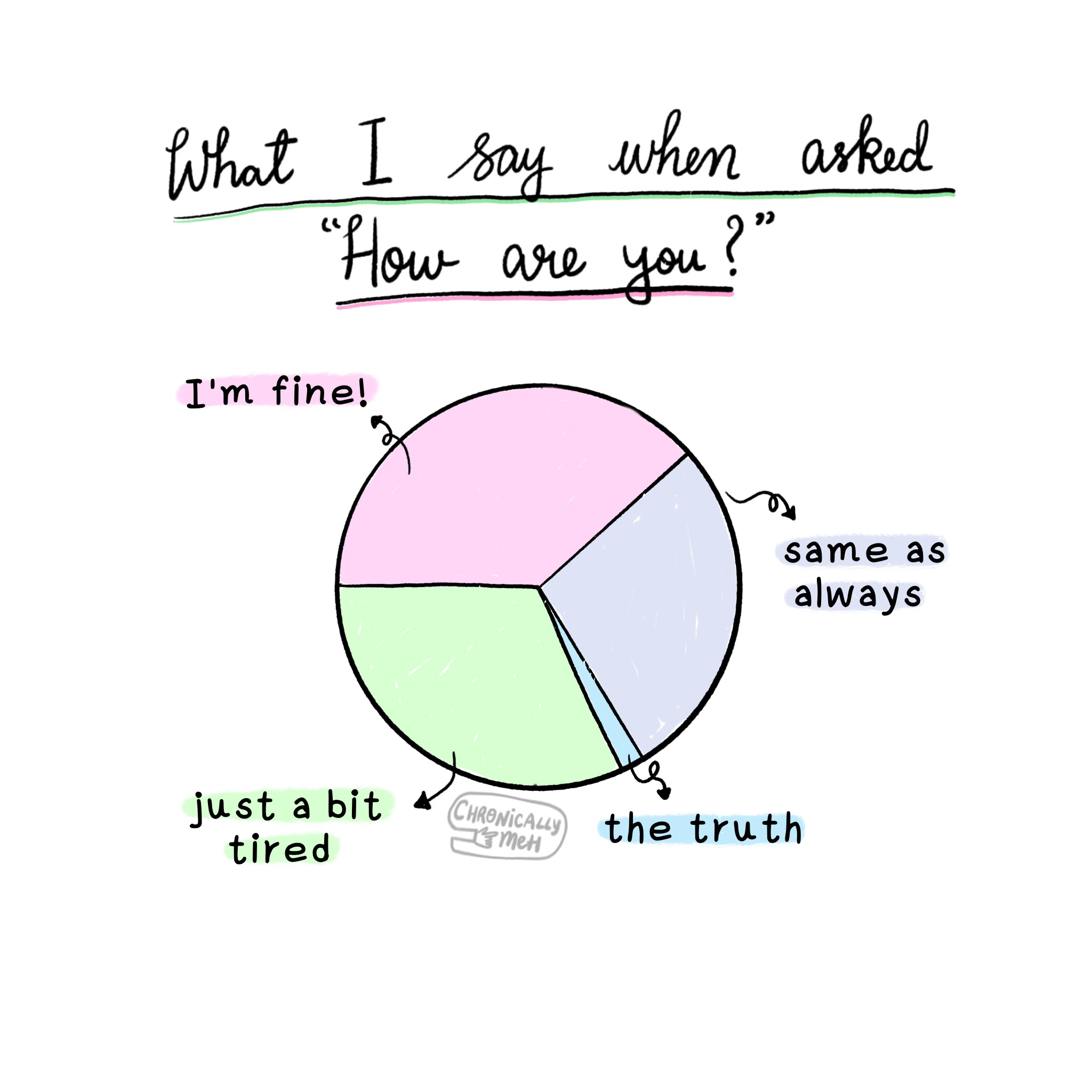
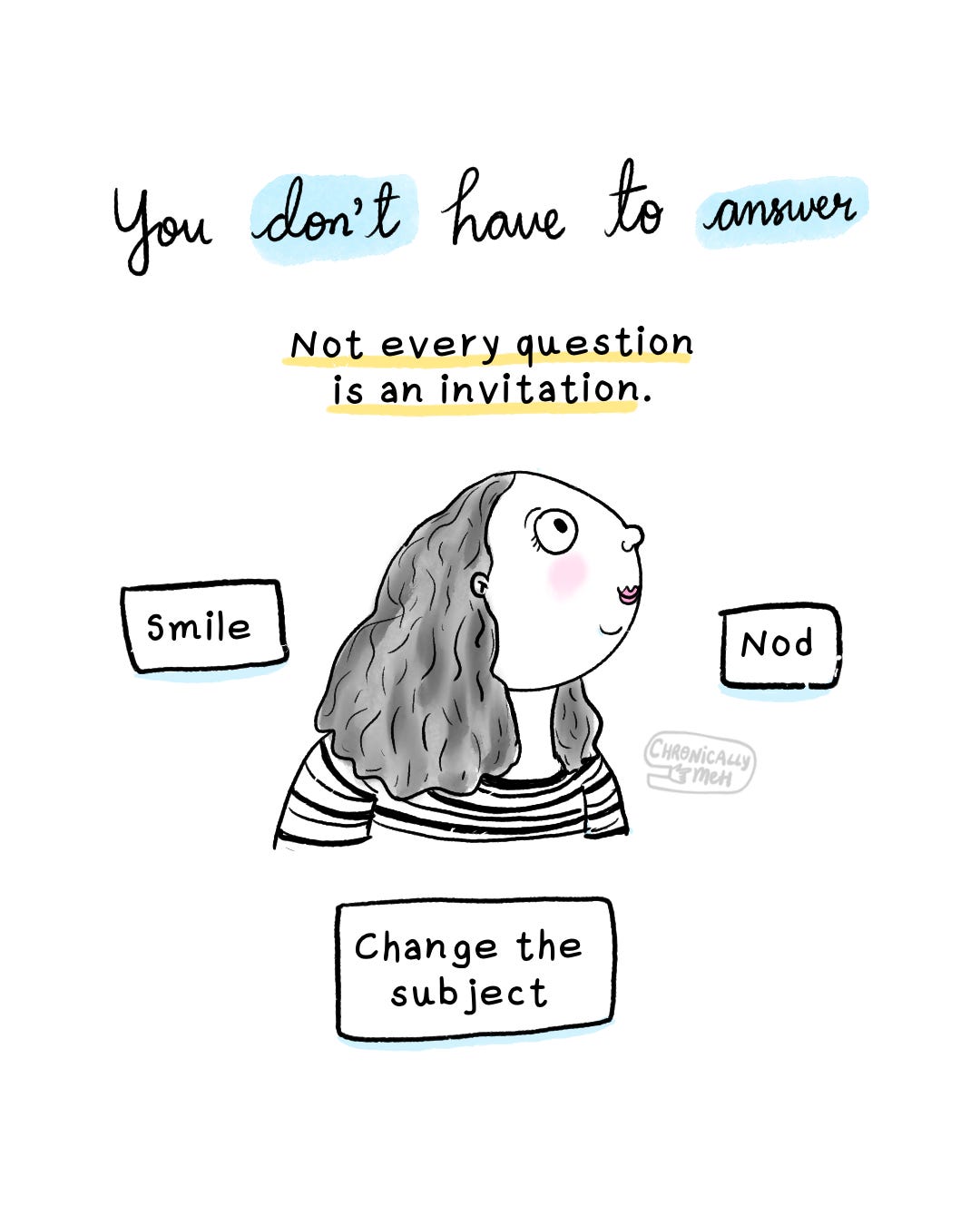
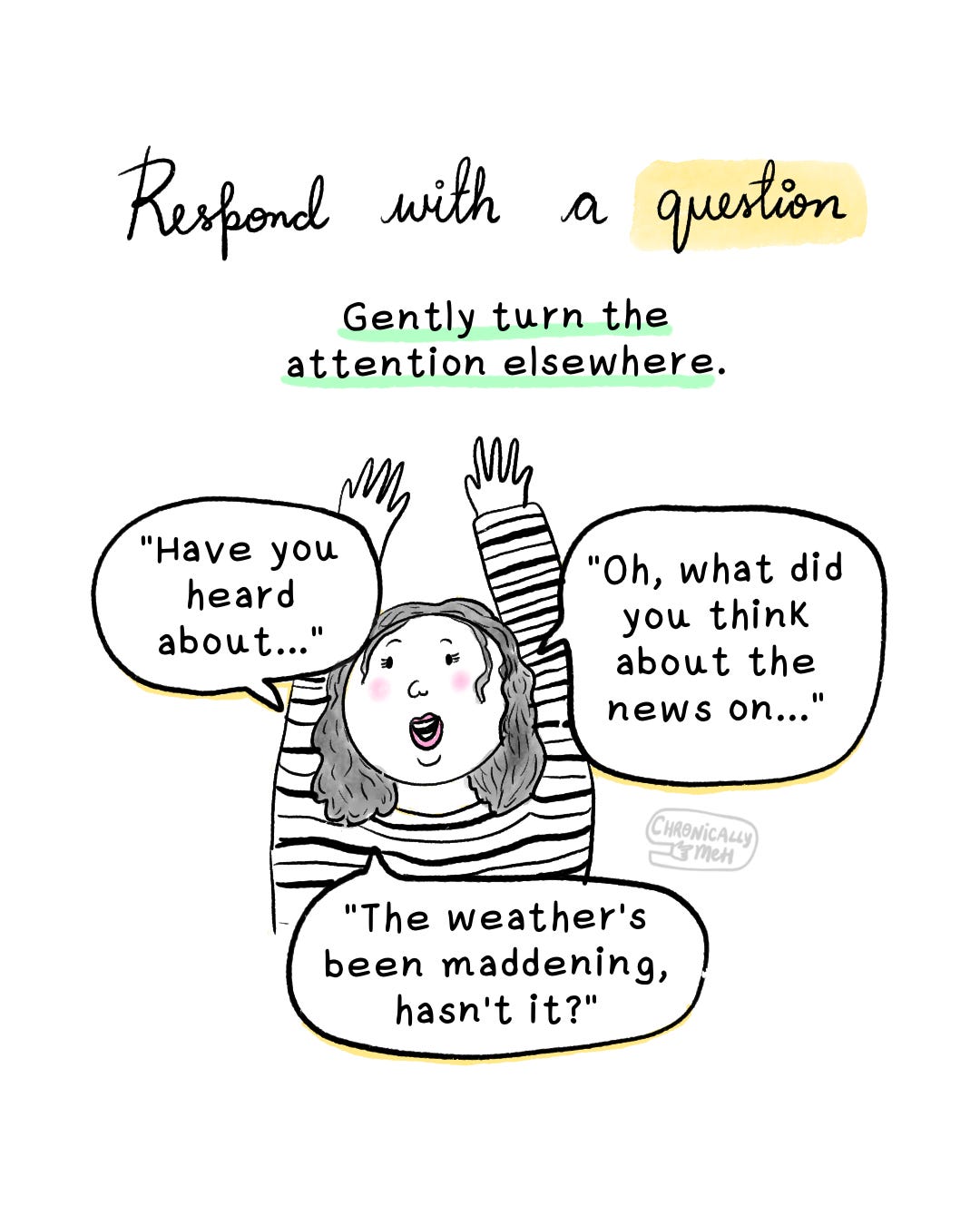
So I say fine. Or getting there. Or change the topic.
And they nod. Relieved. And we move on.
The truth about “how are you?”
It was never really a question. It’s punctuation. It’s what we say instead of hello when we want to seem like we care but don’t have the bandwidth to actually find out. I have never liked it.
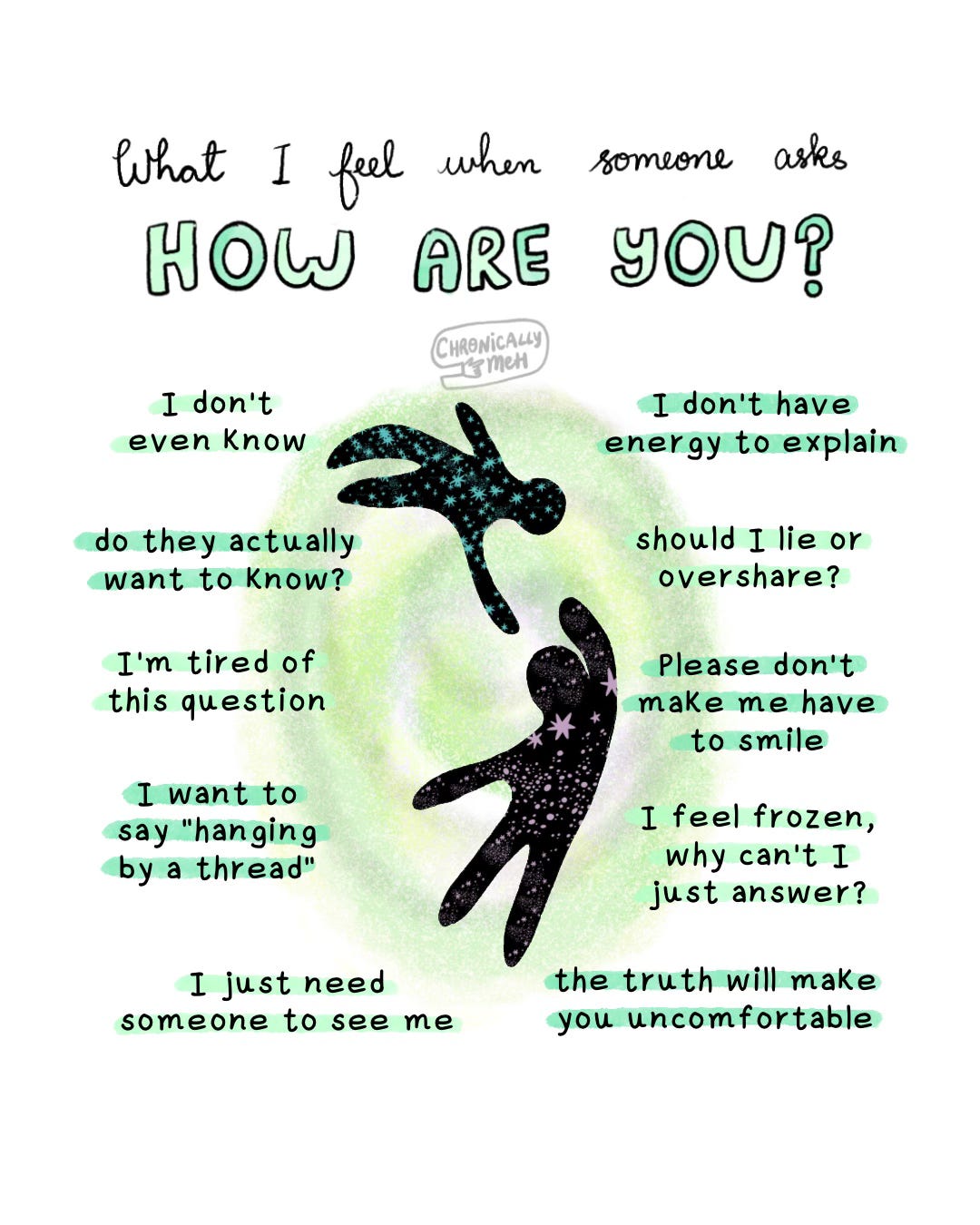
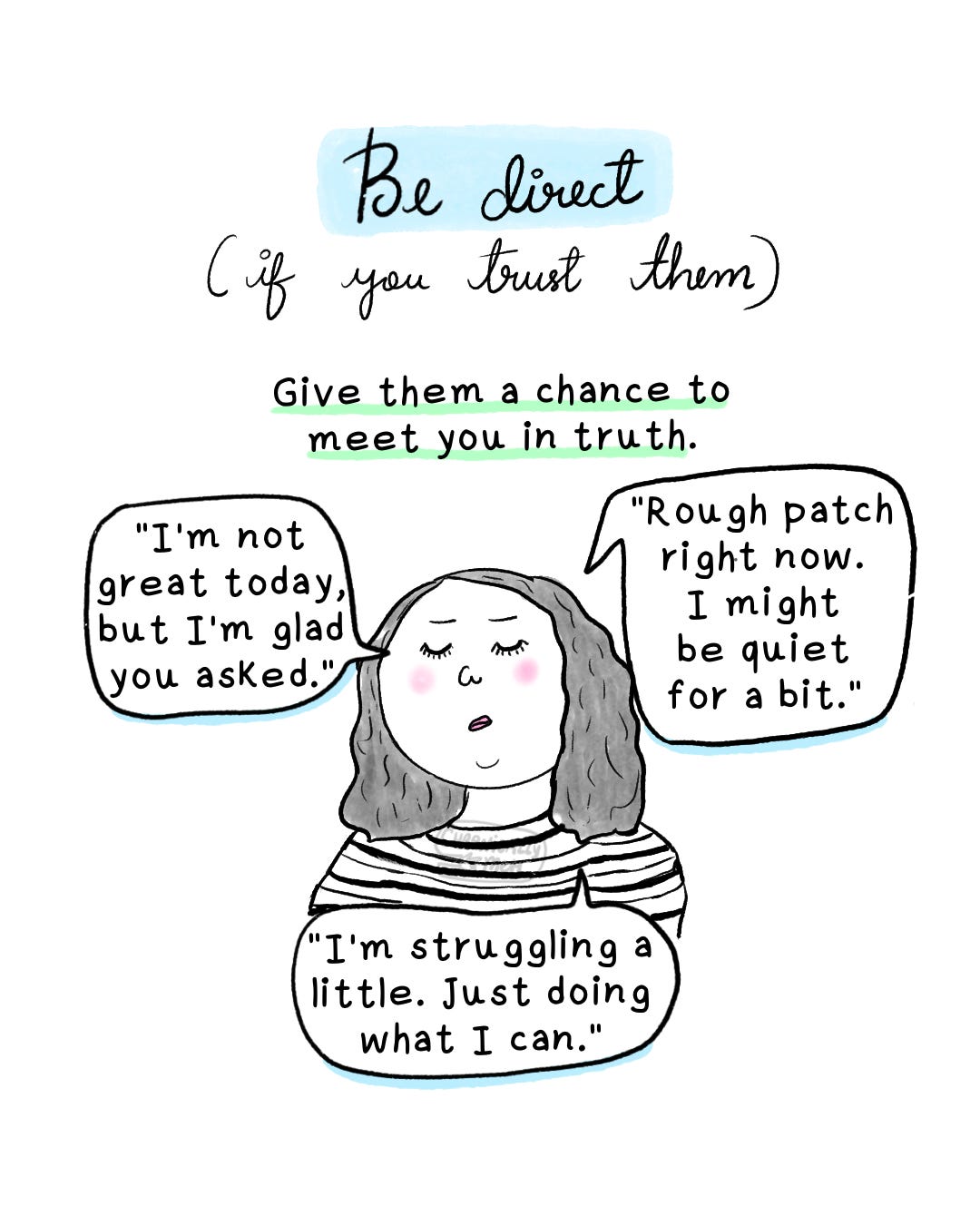
When you’re not fine (genuinely, measurably not fine), the question becomes a small tax you pay multiple times a day, to strangers, to colleagues, to people who love you but don’t know how to hold what’s actually happening.
What I’ve noticed
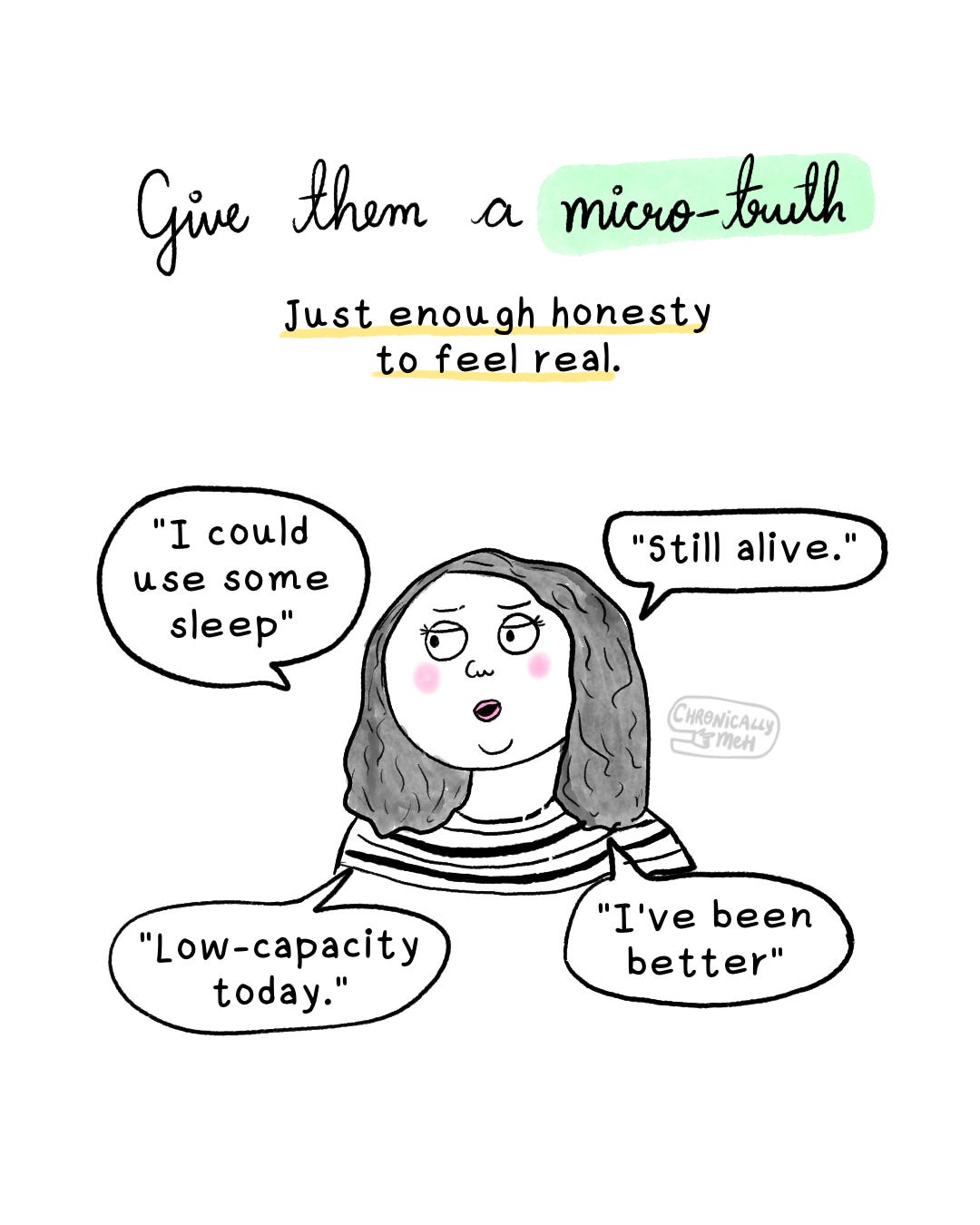
Fighting every “how are you” with brutal honesty costs energy you don’t have. So you learn to just go with it. Smile, nod, move on as a self-protective mechanism.
The more you say you're fine, the more the distance grows between what you're saying and what is actually true. And you're not manifesting okayness. Here, fake-it-till-you-make-it does not work.
Instead, you lose the thread back to your real self, and that may exacerbate whatever you're already carrying. Feelings don’t go anywhere just because you stopped naming them. They don’t like it when you refuse to witness, and so they get louder and louder until you are forced to confront them.
Wisdom from my therapist
There’s a concept in somatic therapy (and I’m paraphrasing badly, but stay with me) that the body keeps a running tab. Every time you override what you’re actually feeling to perform something more palatable, it gets logged. Not consciously. Just stored, and it accumulates.
The gap between what you say and what you feel doesn’t disappear just because you’ve gotten good at crossing it quickly. It just gets wider and quieter until one day something small breaks you open, and you don’t understand why.
This is why telling yourself the truth (even once a day, even just to yourself) is not self-indulgent. It’s maintenance. It’s the smallest possible act of not losing track of yourself entirely.
A daily check-in exercise
On your Notes app or journal, try answering these questions every day (you can be honest about that minute or hour).
How am I, actually?
What am I pretending is fine?
What is one true thing about this moment?
You can write one word, one sentence, or fill a page. The point is to get comfortable with the truth in at least one place, so the gap doesn’t swallow you.
I loved this and all your doodles. Saved for when I don’t know what to say. How are you really is punctuation, great spot
This is super helpful! It really is so hard to answer sometimes. These all seem like good ways to handle it. Cause I’m definitely tired of pushing myself to give a “reasonable” answer lol